 |



de | fr | en Druckansicht 
Erkennen - Anwenden - Verbreiten
Die Stiftung Forschung 3R möchte in diesem Forum ausgewählte 3R-Methoden zur Lösung von fachspezifischen Fragestellungen im Bereich „Life Sciences“ besser bekannt machen.
Die Beispiele werden durch den Expertenausschuss der Stiftung Forschung 3R ausgewählt. Hohe Priorität wird Methoden gegeben, welche eine grosse Wirkung zeigen auf Anzahl und Belastung der Tiere im Experiment. Zum Teil sind die Methoden im Rahmen der Projektevaluation als bereits entwickelt betrachtet worden, weshalb das entsprechende Forschungsprojekt wegen der limitierten Mittel der Stiftung nicht unterstützt wurde. Für die Akzeptanz und die Verbreitung einer 3R relevanten Methode ist es hingegen wichtig, dass sie zur Lösung von fachspezifischen Fragen zur Anwendung kommt. Die Autoren wurden eingeladen, ihre Erfahrungen mit den 3R-Methoden mit wenigen Worten zu beschreiben und auf die entsprechenden Publikationen hinzuweisen.
Für zusätzliche Fragen bitten wir sie, die Autoren direkt zu kontaktieren. Die Projekte können auch über Keywords wie auf der Spalte nebenan, ausgesucht werden. Weitere Methoden finden sie unter den über 130 von der Stiftung Forschung 3R unterstützten Projekten, die mit einer erweiterten Kurzfassung auf dieser Website zu finden sind.
Ein vergleichbarer „Marktplatz“ für 3R relevante Methoden wurde vor kurzem durch die EPAA initiiert. Dort wird die Priorität auf Methoden gelegt, welche im Bereich der Sicherheitsprüfung von pharmazeutischen Produkten und Chemikalien verwendet werden.
Vom Experten Ausschuss der Stiftung Forschung 3R ausgewählt:
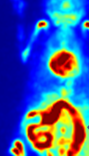 | Experimental colitis through serial assessment of disease activity by 18F-FDG PET/CT (Dezember 2012) Preclinical evaluation of potential drug candidates for human inflammatory bowel disease is performed in murine models of colitis. The most widely used model is dextran-sodium sulfate(DSS)-induced colitis. Non-invasive imaging of murine experimental colitis by Positron emission tomography (PET) combined with radiotracers is feasible and offers the opportunity of serial follow-up investigations. This technique significantly reduces the number of test animals. More... |
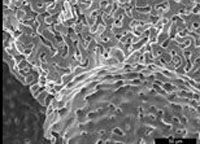 | Quantitative, non-destructive biofilm analysis on irregular surfaces using microcalorimetry (Januar 2012) This in-vitro approach allows the quantification of biofilm formation on implants, human bone grafts and bone-graft substitutes by means of microcalorimetry. The method has the advantage of allowing the detection of bacterial biomass without removing the biofilm from the surface of the specimen. More... |
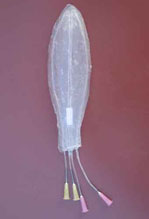 | An new training device for taking blood and administering substances intravenously in rabbits (artificial rabbit ear) (Oktober 2011) The rabbit silicone ear is a new patented training device for practising taking blood and carrying out intravenous injections in rabbit ear veins and arteries. It replaces the need for using live animals in the initial basic exercises required for trainees in animal experimental techniques. More... |
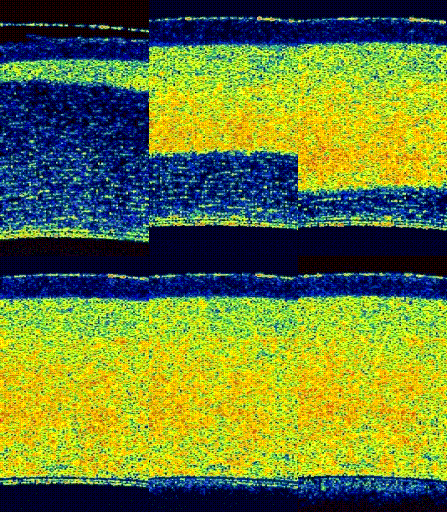 | Organ culture assay as a replacement for the Draize test (April 2011) Interaction of chemicals and pharmaceuticals with the eye can be investigated using an organ culture in vitro assay based on rabbit corneas obtained from abattoir waste. Full metabolic function is maintained over a culturing period of up to 21 day enabling observation of recovery after chemical or mechanical trauma and undesired side effects during pharmaceutical treatment without the need for animal experiments. More... |
 | In-Vitro Protein Manufacturing without the use of rabbit reticulocyte lysates (September 2010) The use of a new human cell lysate kit for protein translation will replace the rabbit reticolcyte lysate and the use of rabbits for its production. More... |
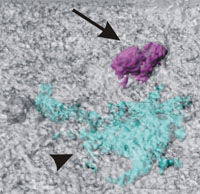 | 3D model of human epithelial airway barrier (Juni 2010) Particle-lung cell interactions can be investigated in a triple cell culture in vitro model of the human airway wall. It is possible to analyze the cellular interplay and response of epithelial cells, human blood monocyte derived macrophages and dendritic cells after exposure to particles. More... |
| Letzte Änderung: 19.03.2018 |  |